
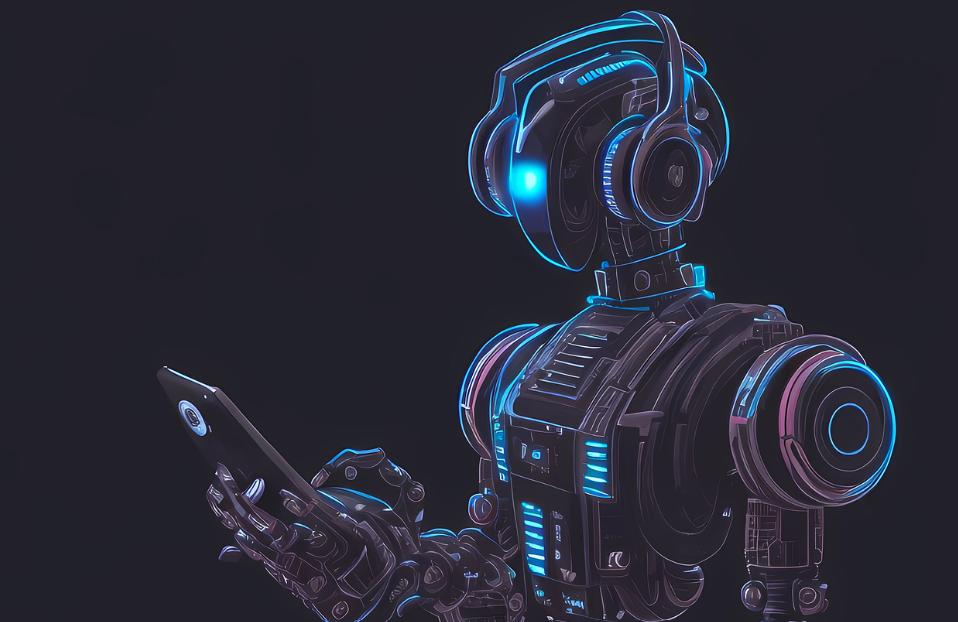
An AI agent is a software system that can perceive its environment, make decisions, and take actions autonomously to achieve specific goals. Unlike traditional programs that follow fixed rules or AI models that only respond to prompts, AI agents are designed to operate continuously, adapt to new information, and act with minimal human intervention. They are increasingly used in areas such as customer service, software development, data analysis, cybersecurity, and large-scale automation.
As AI systems evolve, agents represent a shift from AI as a passive tool to AI as an active operator capable of executing tasks, coordinating with other systems, and optimizing outcomes over time.
Key Features of an AI Agent
AI agents are defined by several core features that distinguish them from simpler AI systems.
First, autonomy allows an AI agent to operate independently once its objectives and constraints are defined. Second, perception enables the agent to gather information from its environment, such as APIs, databases, user input, or other agents. Third, decision-making and reasoning allow the agent to evaluate multiple actions and choose the most effective one. Finally, action execution enables the agent to interact with external systems, such as sending messages, executing code, or triggering workflows. Many AI agents also include memory or state, allowing them to learn from previous actions and maintain context over time.
What Is the Difference Between AI Agents, AI Assistants, and Bots?
Although these terms are often used interchangeably, they represent different levels of capability.
AI assistants are typically user-driven systems designed to respond to requests, such as answering questions or performing simple tasks when prompted. Bots are usually rule-based or narrowly focused programs that follow predefined scripts, such as chatbots used for FAQs or automated replies.
In contrast, AI agents are goal-oriented and proactive. They can plan multi-step actions, decide when to act, interact with multiple tools or systems, and operate continuously without direct human input. In short, assistants respond, bots follow rules, and agents act autonomously.
How Do AI Agents Work?
AI agents work by combining perception, reasoning, and action in a continuous loop. They first observe their environment by collecting relevant data. Next, they process and reason over that information using models such as large language models (LLMs), planning algorithms, or reinforcement learning techniques. Based on this reasoning, they select and execute actions that move them closer to their goals. The results of those actions are then fed back into the system, allowing the agent to adapt and improve future behavior.
Modern AI agents often integrate tools, APIs, memory systems, and schedulers, enabling them to handle complex, real-world tasks at scale.
What Are the Types of Agents in AI?
AI agents can be categorized in several ways depending on how they interact and how they are deployed.
Based on Interaction
Some agents are reactive, responding immediately to environmental changes without long-term planning. Others are deliberative or goal-based, capable of reasoning about future states and planning sequences of actions. More advanced agents may be learning agents, improving their performance over time based on feedback and experience.
Based on Number of Agents
AI systems may involve a single agent operating independently or multi-agent systems where multiple agents interact, cooperate, or compete. Multi-agent environments are commonly used for simulations, market modeling, social behavior studies, and complex coordination tasks.
Benefits of Using AI Agents
AI agents offer several important advantages across industries and applications.
Efficiency and Productivity
AI agents can automate repetitive and complex workflows, operate continuously without fatigue, and scale across large systems. This significantly improves efficiency and reduces operational costs.
Improved Decision-Making
By processing large volumes of data and evaluating multiple scenarios, AI agents can support faster and more accurate decision-making, especially in dynamic or data-intensive environments.
Enhanced Capabilities
AI agents can combine reasoning, memory, and tool usage to perform tasks that exceed human speed or scale, such as monitoring systems in real time or managing thousands of parallel operations.
Social Interaction and Simulation
In multi-agent systems, AI agents can simulate social behavior, economic interactions, or collaborative problem-solving. This is valuable for research, training, and testing complex systems.
Challenges With Using AI Agents
Despite their advantages, AI agents present several challenges. Security risks, such as prompt injection or unauthorized actions, are a major concern. Reliability and alignment issues can arise if agents misunderstand goals or operate beyond intended boundaries. There are also challenges related to governance, monitoring, and ethical use, especially when agents act autonomously at scale. Proper safeguards, sandboxing, and oversight are essential when deploying AI agents in real-world environments.
Deploy AI Agents for Scale and Efficiency With Cloud Run
Modern cloud platforms make it easier to deploy and manage AI agents reliably. Services such as Cloud Run allow organizations to run AI agents in containerized, serverless environments that automatically scale based on demand. This approach improves availability, reduces infrastructure overhead, and enables secure deployment of agent-based systems across different workloads.
Use Cases for AI Agents
AI agents are already being applied across a wide range of domains.
Customer Agents
Customer-facing AI agents handle support requests, manage inquiries, and resolve issues autonomously, improving response times and customer satisfaction.
Employee Agents
Employee agents assist internal teams by automating workflows, scheduling tasks, retrieving information, and supporting decision-making across departments.
Creative Agents
Creative AI agents generate content such as text, images, music, or design concepts, often collaborating with humans or other agents in creative workflows.
Data Agents
Data agents collect, clean, analyze, and monitor large datasets, enabling real-time insights and automated reporting.
Code Agents
Code agents assist with software development by writing, reviewing, testing, and optimizing code, accelerating development cycles.
Security Agents
Security agents monitor systems for threats, detect anomalies, and respond to incidents automatically, enhancing cybersecurity resilience.
Final Words
By combining autonomy, intelligence, and action, AI agents are becoming a foundational component of modern AI systems. As tools, infrastructure, and safeguards continue to mature, AI agents are expected to play an increasingly central role in scalable automation and intelligent decision-making.
FAQ
Is ChatGPT an AI agent?
ChatGPT is both a chatbot and an AI agent, depending on its configuration. By itself, it remains a reactive conversational AI. When augmented with tools, APIs, or scripts, it gains autonomy and functionality, becoming a fully capable AI agent that can perform tasks, interact with systems, and operate independently. This versatility makes ChatGPT a flexible platform for both casual use and complex agent-based applications.
What Is an Example of an AI Agent?
An AI agent is a software system that can perceive its environment, make decisions, and take actions autonomously to achieve specific goals. One of the best-known examples of an AI agent is AutoGPT, a system built on large language models like OpenAI’s GPT that can perform multi-step tasks with minimal human input.
Who Are the Big 4 AI Agents?
The AI agent market is rapidly expanding, with several advanced systems enabling businesses to automate tasks, analyze data, and improve productivity. Today, the “Big 4” AI agents leading the market are:
- OpenAI’s Operator
- Devin AI by Cognition Labs
- Claude by Anthropic
- Amazon’s Nova Act
Each of these AI agents offers unique capabilities designed to streamline workflows, assist with decision-making, and enhance overall efficiency.
Are AI agents risky?
AI agents offer significant opportunities for automation and intelligence-driven decision-making, but they carry inherent risks. Unauthorized data access, leaks, misuse of information, and operational errors are among the key concerns. Implementing AI risk management and security measures is critical, particularly for organizations in regulated industries, to ensure that AI agents can operate safely and effectively.