
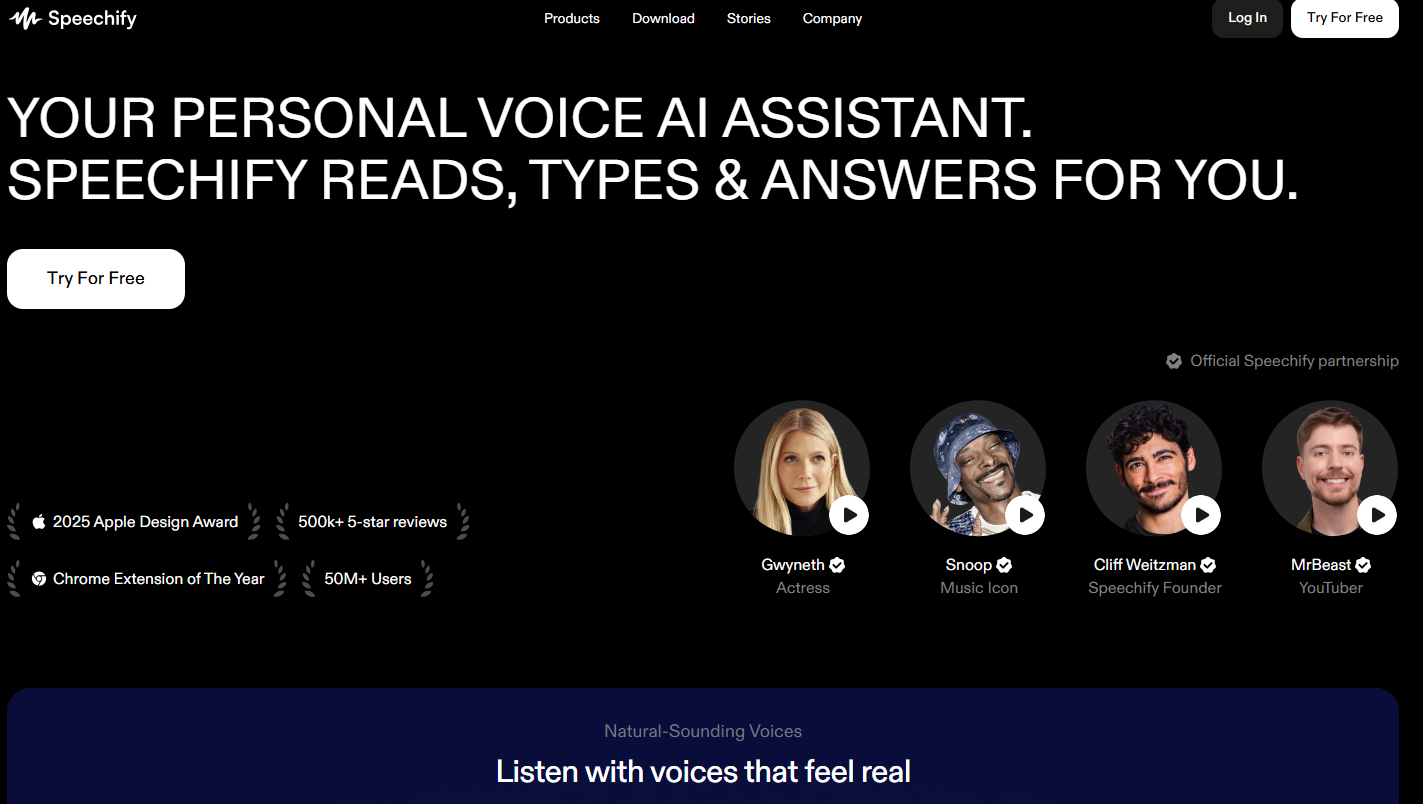
Speechify is a popular text-to-speech (TTS) platform available on iOS, Android, Mac, and web browsers. The tool was created by Cliff Weitzman, who has dyslexia, to help make reading easier and more accessible. Using artificial intelligence and optical character recognition (OCR), Speechify can convert both digital text and scanned physical documents into clear, natural-sounding audio. It is widely used by people with reading difficulties, visual impairments, students, professionals, and anyone who prefers listening instead of reading.
Key Features
Speechify offers a wide range of features designed to handle almost any type of text content. It supports formats such as PDFs, Word files, web pages, emails, and scanned images. The platform provides hundreds of high-quality voices in more than 60 languages, including expressive AI voices and optional celebrity voices for premium users. It also allows voice cloning, giving creators the ability to generate audio using their own voice.
Users can adjust playback speed from normal pace up to very fast speeds, which is useful for productivity or speed-listening. All progress syncs across devices, so you can switch between phone, tablet, or desktop smoothly. Premium users can also download audio files for offline listening. For businesses or developers, Speechify offers an API that allows text-to-speech integration in websites, apps, or software systems.
Pricing and Plans
Speechify uses a freemium pricing model. The free version provides basic voices, standard reading speed, and online-only listening. The premium subscription is billed annually at a higher cost and unlocks advanced features such as high-quality voices, voice cloning, scanning with OCR, unlimited listening, faster speeds, and offline audio downloads. API plans are available separately for companies that need large-scale text-to-speech capability or custom voices.
Benefits and Use Cases
Speechify is highly valued for its accessibility benefits. It is especially helpful for people with dyslexia, ADHD, learning disabilities, visual impairments, or those who struggle with long reading sessions. Students use it to listen to textbooks, articles, and notes, which can improve comprehension and retention. Professionals and multitaskers frequently convert emails, reports, or web pages into audio to listen while commuting, exercising, or working. Content creators use Speechify for narration, videos, branded content, and podcasts using cloned or custom voices. The ability to scan printed materials also makes it a strong tool for handling physical books or documents.
Drawbacks and Criticisms
Despite its strengths, Speechify has some commonly reported downsides. Many users feel the premium plan is expensive, especially for long-term use. The free trial is short, which some say is not enough time to fully evaluate the premium features. There are reports of customer service being slow or unhelpful, particularly when dealing with subscription issues or refunds. Some users have observed occasional mispronunciations, especially with uncommon names, technical terms, or foreign words.
Concerns have also been raised about content usage and licensing, as some authors and creators have questioned how their written work is handled within certain related services. Additionally, research has noted that synthetic voice services can sometimes lack diverse accent representation, raising concerns about inclusivity.
Reviews
There are no reviews yet.