
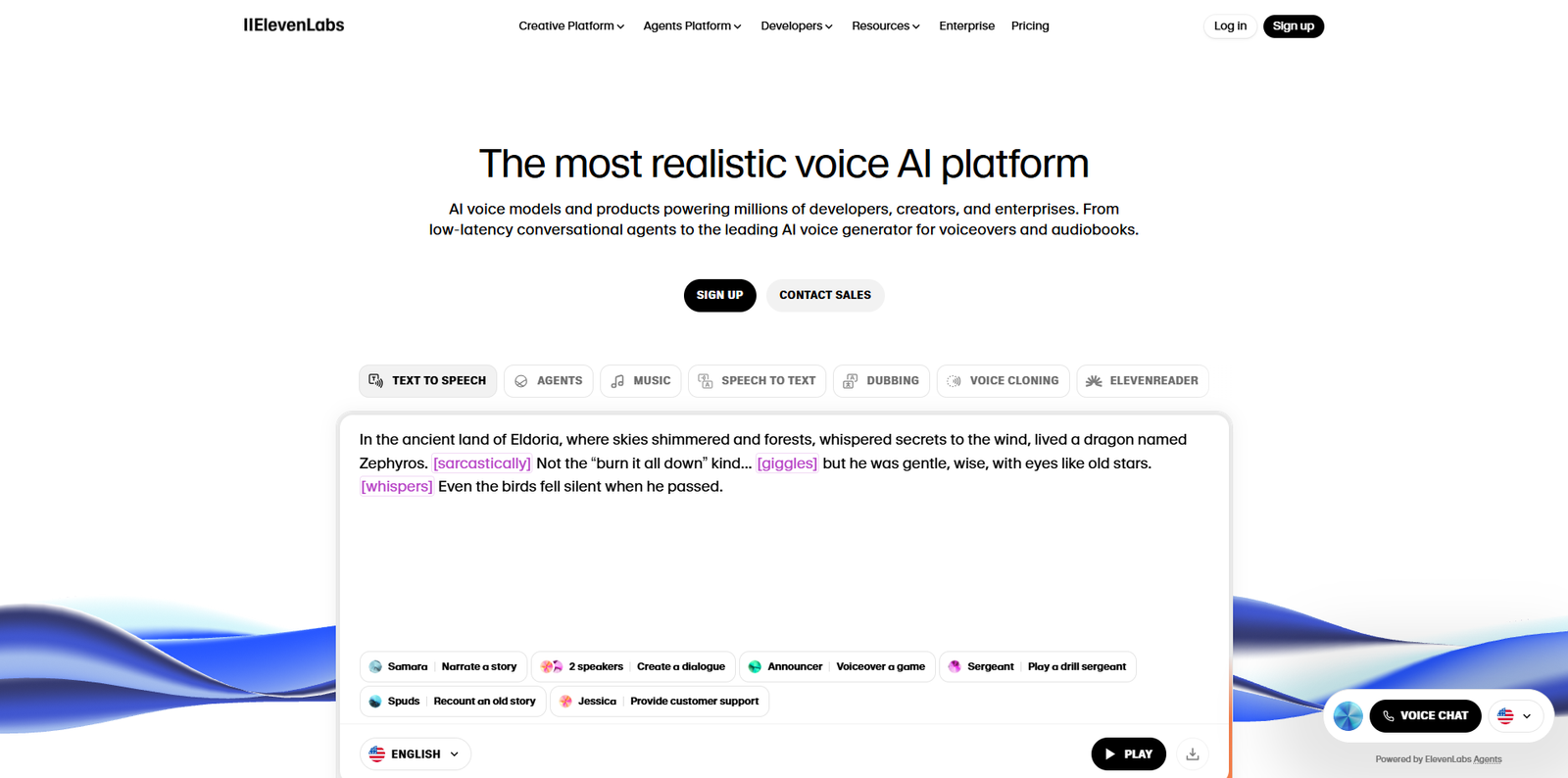
ElevenLabs is a company specializing in AI-generated speech, especially realistic, expressive text-to-speech and voice cloning. They provide a web-based platform, a mobile app for creators, and a developer API / SDK for broader integration. Their technology has become popular among content creators, businesses, and developers looking for high-quality, natural-sounding AI voice.
Key Features
- Text-to-Speech Models
- They offer multiple models tailored for different use cases: highly expressive, low-latency, and multilingual.
- Their most advanced model supports emotional nuance, timing control, and multi-speaker dialogue in many languages.
- Voice Cloning
- Users can upload a few minutes of audio to create a digital voice clone.
- The cloned voice retains tone, accent, and expressiveness, making it valuable for brand voices, content creators, or personal usage.
- Dubbing & Translation
- The platform supports automatic translation and dubbing of audio/video into multiple languages while preserving the speaker’s voice characteristics.
- This is especially useful for global content creators or e-learning applications.
- Expressiveness & Tonal Control
- Emotional and contextual awareness: the AI adjusts its delivery—intonation, pacing, emphasis—based on the text and optional inline instructions.
- Inline tags let users control timing, pauses, emphasis, and speaker transitions in dialogue.
- Developer / API Features
- Provides a Text-to-Speech API with different models: expressive, low latency, and multilingual.
- Offers a Speech-to-Text API with features like speaker diarization and detailed timestamps.
- Voice Changer API allows developers to manipulate inflection, emotion, timing, and pitch.
- Agent Platform supports building AI-driven conversational agents (voice bots) for web, phone, or mobile.
- SDKs in Python and TypeScript make it easy to integrate into custom applications.
- AI Safety & Moderation
- The company implements safeguards and usage controls to encourage responsible voice cloning.
- They provide tools to help track the provenance of generated voices.
- They also offer a way to check whether an audio clip was generated using their system.
- Mobile App
- Accessible on mobile devices, allowing creators to type scripts, generate voice overs, and export audio.
- Enables sharing to social platforms and other creative outlets directly from the app.
- Voice Marketplace
- Has a licensed marketplace for famous voices, allowing content creators to legally use celebrity voices.
- The voice licensing model is performer-first, meaning voice actors give permission and are fairly compensated.
- Enterprise Use
- They support business / enterprise clients with scalable solutions, custom plans, and priority support.
- Ideal for media companies, gaming studios, education tech, customer service, and more.
Pricing
- A free plan is available, with a limited monthly character allowance.
- Starter tier: modest monthly cost with commercial licensing and basic voice cloning.
- Creator tier: more characters, higher-quality audio, and better cloning capabilities.
- Pro tier: designed for heavier usage / production teams.
- Enterprise / Scale plans: for users needing millions of characters per month, multi-seat usage, or custom agreements.
Advantages
- Extremely realistic, natural-sounding voice generation.
- Expressive control: ability to imbue emotion, pacing, and personality into the generated speech.
- Powerful voice cloning: even with a few minutes of sample audio.
- Multilingual capabilities make it ideal for global content or dubbing.
- Developer APIs allow integration into apps, voice agents, and interactive experiences.
- Mobile app gives flexibility to generate voice content on the go.
- Licensed voice marketplace provides legal access to well-known voices.
- Scalable for both individual creators and large enterprises.
Challenges and Risks
- Higher pricing at scale may make it less accessible for some users.
- There’s potential for misuse (e.g., deepfake voice impersonation).
- Voice detection tools exist, but may not detect all types of generated speech.
- Accent or pronunciation issues may require manual tweaking or pronunciation dictionaries.
- Ethical and legal risks around voice cloning mean users must be careful about consent and licensing.
Use Cases
- Content creation: podcasts, YouTube videos, narration, storytelling.
- Audiobooks: authors and publishers generate spoken versions of texts.
- Gaming: building character voices, dialogues, NPC conversation.
- Conversational AI: creating voice bots for websites, phone agents, and more.
- Localization: dubbing videos or educational content into multiple languages.
- Accessibility: providing spoken content for visually impaired users or users with reading difficulties.
Reviews
There are no reviews yet.